USDJPY: Sideways phase before the next move
USD/JPY is trading just below the critical resistance level of 160, a barrier it has tested multiple times without breaking. The currency pair has moved into a sideways consolidation after hitting the critical supply zone.
Fundamental Outlook
Fundamentally, the Japanese yen remains under pressure against the US dollar as the Bank of Japan (BoJ) faces challenges in raising rates amid rising oil prices and strong US CPI data. This keeps the interest rate differential between the two countries wide. The next BoJ monetary policy meeting is scheduled for April 27–28, 2026, with markets pricing in roughly a 60% chance of a rate hike on April 28.
The market has moved into a sideways consolidation after hitting the critical supply zone around 160 in March. The pair fell to about 158 last week as the yen appreciated on better risk sentiment in the wake of the ceasefire announcement. Fears of intervention, as Japanese officials cautioned against currency weakness, and prospects of a near-term BoJ rate hike also helped the yen. However, USD/JPY found support above 158 after this decline and recovered into a consolidation zone, indicating a balance between supply and demand while traders consider their next course of action.
Technical Forecast
Currently, USD/JPY is trading just below the critical resistance level of 160, a barrier it has tested multiple times without breaking. As of now, the pair is near 159.00. While the price remains under this resistance, upward momentum remains limited. On the downside, the key support zone lies between 157.40 and 157. A break below this support would likely signal a continuation of the downward trend. Until then, the pair is expected to remain range-bound.
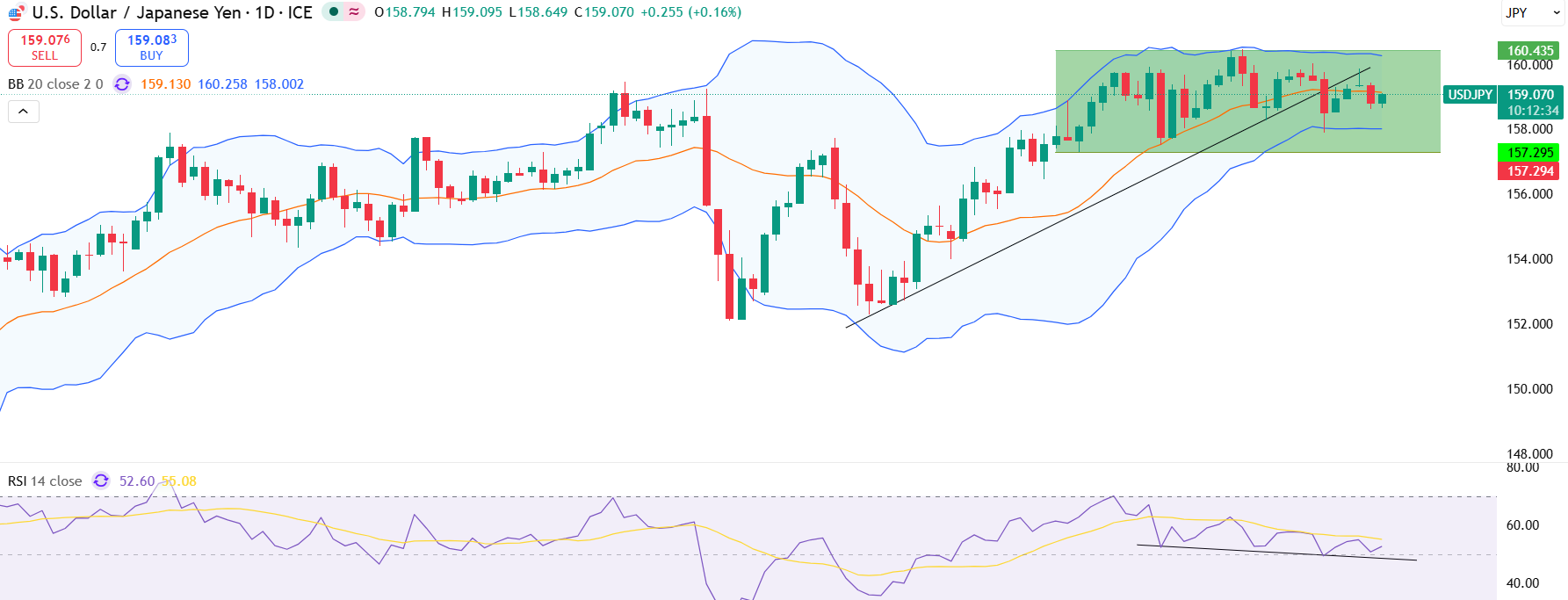
Bottom Line: Despite short-term risks, USD/JPY retains strong potential for gains. A decisive rally above resistance between 160.00 and 160.30 could trigger a surge toward 161 and 161.30. On the downside, sellers should look out for any move back below 157.00.
Warning! This material is not intended as investment advice. Past performance data does not guarantee future returns. Investing in foreign currencies may affect your returns due to their fluctuations. Any transaction in securities may result in both profits and losses. The assumptions and expectations set forth in this material are only estimates that may not be accurate and may change depending on current economic conditions. These statements do not guarantee future returns.

Syam KP
Meet Syam KP, a financial markets professional with more than fourteen years of experience in forex, CFDs and capital markets. Since 2012, he has worked with several brokerage firms as a trader and market strategist, developing a practical understanding of how markets move. He also holds a qualification from CISI in the United Kingdom.
At FX Junction, Syam turns complex market information into clear and useful insights. His work combines technical and fundamental analysis, portfolio management, risk management and timely commentary on global developments. Whether markets are calm or moving fast, Syam focuses on what matters most: understanding the bigger picture, spotting meaningful opportunities and keeping risk firmly in view.
Articoli correlati
ASML registra un fatturato record e rivede al rialzo le proprie previsioni
ASML registra un fatturato record e prospetti più positivi, grazie all’espansione dei piani di investimento nell’intelligenza artificiale da parte dei clienti. La domanda che sorge spontanea è se l’azienda riuscirà a trasformare la crescente domanda di apparecchiature in una crescita sostenuta degli utili, aumentando al contempo la capacità produttiva.
Leggi di più →Il crollo dei prezzi dei chip per l'intelligenza artificiale scuote la fiducia nel boom
I titoli legati ai chip per l'intelligenza artificiale crollano mentre la concorrenza cinese e le pressioni finanziarie mettono alla prova la fiducia nel settore. La domanda immediata è se questa ondata di vendite rifletta un temporaneo riassetto delle valutazioni o una minaccia più duratura alla crescita degli utili.
Leggi di più →