Dollar catching a relief bid, but conviction remains weak
The US dollar is experiencing a modest recovery on Wednesday morning. However, the current rebound still looks driven more by short covering than by a clearly strong wave of spot buying.
What caused the dollar’s modest increase?
The dollar index plunged to a fresh multi-week low on Tuesday as hopes for a diplomatic solution to the Middle East conflict dampened safe-haven demand for the currency. The modest increase was triggered by comments from Chicago Fed President Austan Goolsbee, who suggested that Fed rate cuts may be delayed until 2027, depending on oil price trends. This tempered expectations for rate cuts in 2026, supporting the dollar’s rebound.
Conversely, the recent drop drove the hourly RSI down into the 20s, indicating an oversold condition that typically leads to some stabilization or relief bounce. However, this does not guarantee a bottom. The market may be approaching a temporary pause, but the damage to the structure is evident, with weakening short-term moving averages and neutral-to-bearish oscillator readings signaling potential further declines if bullish momentum is not restored. Fundamentally, if US-Iran tensions continue to ease and oil prices remain stable, this relief rally could lose momentum.
Is the USD starting to turn bullish, or is it just a relief bounce?
The 4-hour DXY chart offers a more detailed perspective on recent midterm movements. The rebound is marked by limited volume, suggesting a lack of strong conviction so far. Key short-term support is near 97.90, with resistance in the 98.60 to 98.70 range. If the index fails to break above this resistance, it could trigger another downward move toward 97.60, particularly if selling volume intensifies. The 98.60/70 level is crucial, having flipped from support to resistance after the recent decline.
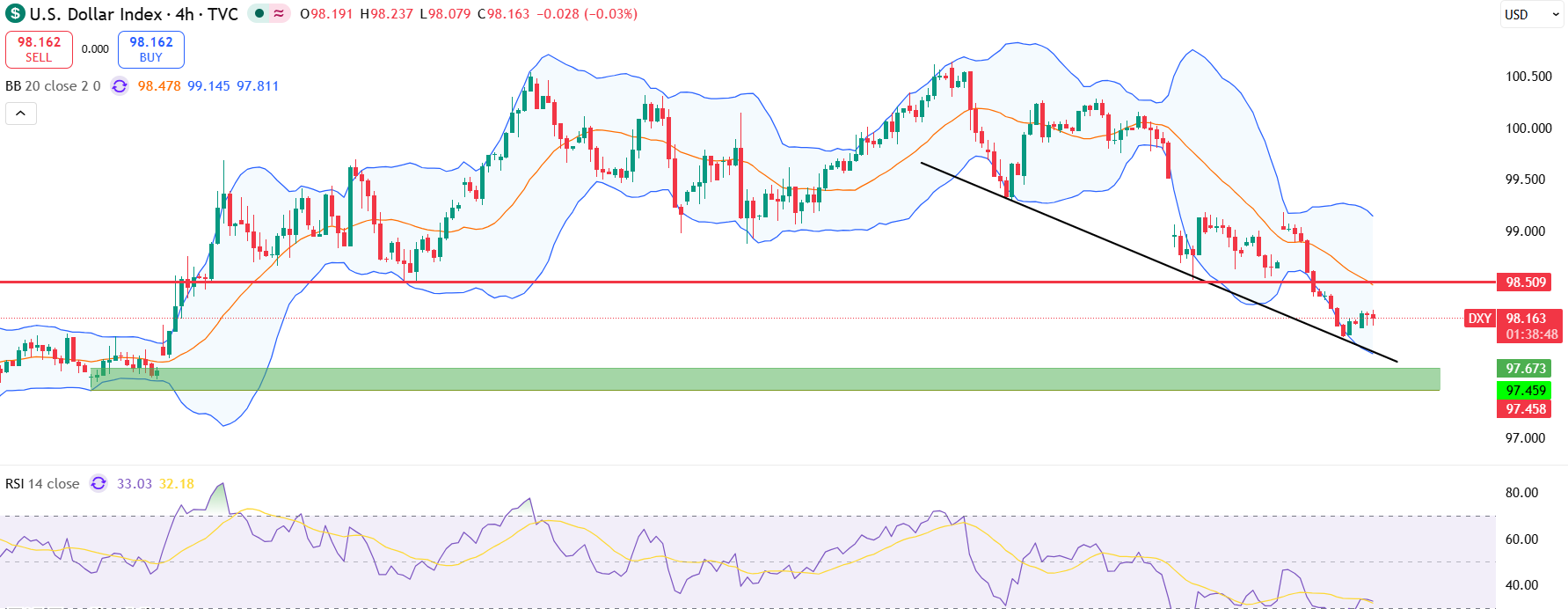
On the other hand, a clear breakout and sustained trading above this zone would indicate that the recent 98.00 area might be a short-term bottom, potentially leading to the next significant upward move in the cycle.
Warning! This material is not intended as investment advice. Past performance data does not guarantee future returns. Investing in foreign currencies may affect your returns due to their fluctuations. Any transaction in securities may result in both profits and losses. The assumptions and expectations set forth in this material are only estimates that may not be accurate and may change depending on current economic conditions. These statements do not guarantee future returns.
Artikel Berkaitan
USDJPY: Sideways phase before the next move
USD/JPY is trading just below the critical resistance level of 160, a barrier it has tested multiple times without breaking. The currency pair has moved into a sideways consolidation after hitting the critical supply zone.
Baca Lagi →Bitcoin jumps above $74k, maintaining gains as risk sentiment brightens
Bitcoin (BTCUSD) hit a fresh 4-week high of $74,900 early Tuesday morning before giving up some gains, reflecting improved investor risk appetite.
Baca Lagi →