Gold Remains Under Pressure as Rising Yields and Hawkish Fed Bets Cloud the Outlook
Gold has now declined over several consecutive sessions. At present, rising Treasury yields, dollar strength and hawkish Federal Reserve expectations are dominating the market narrative.
The precious metal staged a modest recovery during Monday’s late New York session following a dramatic sell-off earlier in the day. However, the rebound quickly lost momentum. Gold surrendered its early gains during Tuesday’s European trading session and fell back below $4,280, suggesting that sellers remain firmly in control.
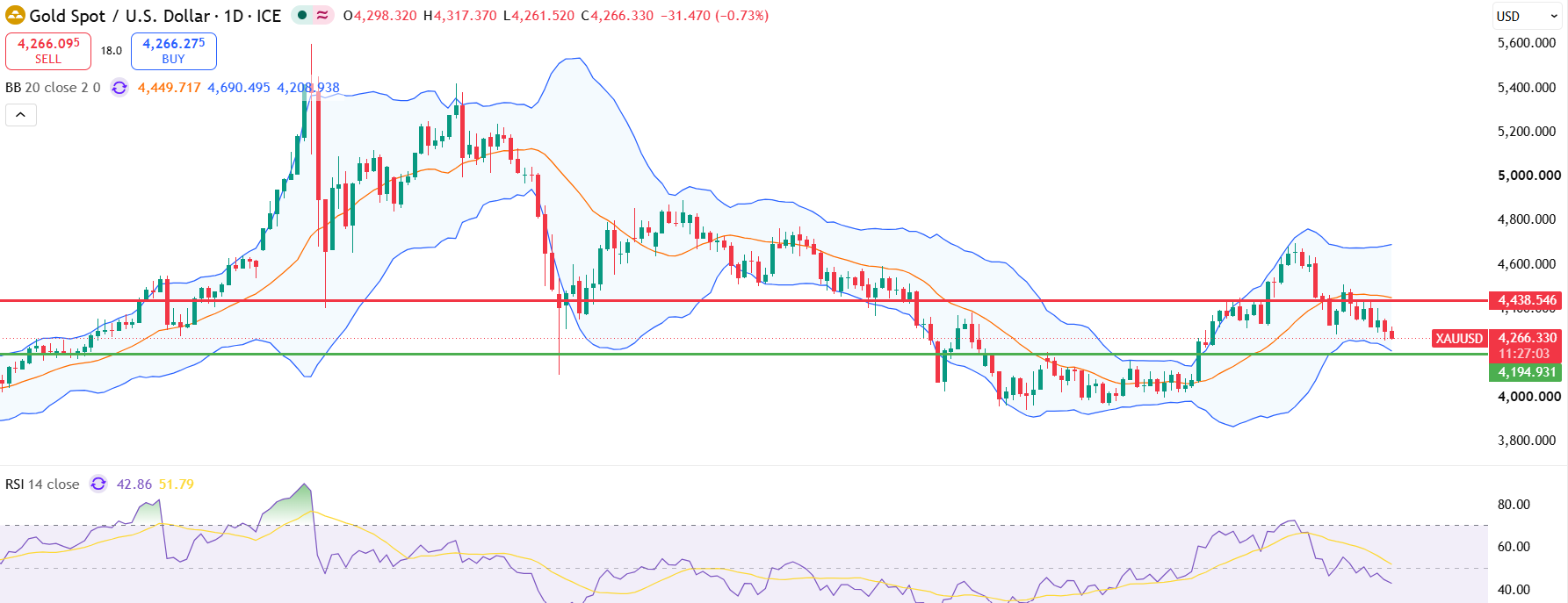
Gold has now declined over several consecutive sessions as markets price in the possibility that U.S. interest rates will remain elevated for longer—or potentially rise further. The metal dropped to a fresh six-week low of $4,253 on Monday after breaking below the psychologically and technically important $4,300 support zone.
That breakdown marked a notable deterioration in the short-term technical picture. The inability to reclaim $4,300 during the subsequent recovery has reinforced the level’s new role as potential resistance and left gold vulnerable to another leg lower.
Treasury Yields Climb to Multiyear Highs
The benchmark 10-year U.S. Treasury yield climbed above 5.021%, reaching its highest level since mid-2007. The move significantly increases the opportunity cost of holding non-yielding assets such as gold.
Treasury yields have advanced as investors bet that persistent inflationary pressures and continued economic resilience could force the Federal Reserve to maintain restrictive monetary policy for longer than previously anticipated. Growing speculation about another rate increase has further unsettled the gold market.
For now, the market appears more focused on the prospect of elevated real yields and a stronger dollar than on the longer-term inflationary implications of higher commodity prices.
Hawkish Fed Bets and Stronger Dollar Add to Selling Pressure
Renewed demand for the U.S. dollar has been one of the principal headwinds facing gold. The greenback hovered near a two-week high as traders adjusted their expectations for the path of Federal Reserve policy.
Because gold is priced in dollars, a stronger U.S. currency makes the metal more expensive for buyers using other currencies. This can weaken international demand and amplify selling pressure, particularly when the dollar’s advance is accompanied by rising bond yields. The recent shift in interest-rate expectations has also reduced the appeal of gold as a defensive asset.
Gold Technical Outlook
From a technical perspective, gold’s break below $4,300 has weakened the short-term outlook. The limited follow-through during Monday’s rebound indicates that dip-buyers are not yet stepping in with sufficient conviction to reverse the decline.
The $4250 zone represents the first immediate downside reference point. A sustained break beneath that level could expose the psychologically important $4,200 area, which now appears to be the next major bearish target.
On the upside, gold would need to recover above $4,400/40 to ease the immediate selling pressure. A convincing move back above that threshold could trigger short-covering and create room for a broader rebound. Until then, rallies may continue to attract sellers.
Conclusion
Although the sharp recent decline may eventually attract bargain hunters, the technical picture does not yet suggest that buyers are prepared to return aggressively. A meaningful recovery will likely require an improvement in the broader macroeconomic backdrop—most notably a decline in yields, a weaker dollar or a less hawkish signal from the Federal Reserve.
Warning! This material is not intended as investment advice. Past performance data does not guarantee future returns. Investing in foreign currencies may affect your returns due to their fluctuations. Any transaction in securities may result in both profits and losses. The assumptions and expectations set forth in this material are only estimates that may not be accurate and may change depending on current economic conditions. These statements do not guarantee future returns.

Meet Syam KP, a financial markets professional with more than fourteen years of experience in forex, CFDs and capital markets. Since 2012, he has worked with several brokerage firms as a trader and market strategist, developing a practical understanding of how markets move. He also holds a qualification from CISI in the United Kingdom.
At FX Junction, Syam turns complex market information into clear and useful insights. His work combines technical and fundamental analysis, portfolio management, risk management and timely commentary on global developments. Whether markets are calm or moving fast, Syam focuses on what matters most: understanding the bigger picture, spotting meaningful opportunities and keeping risk firmly in view.
Relaterte artikler
Gold Rebounds as KOSPI Selloff Triggers Halt
Gold recovers as Asian stocks fall and South Korea’s KOSPI triggers a 20-minute trading halt. The immediate question is whether a softer dollar can sustain the rebound while inflation keeps interest-rate risks in focus.
Les mer →ASML Posts Record Sales and Lifts Its Outlook
ASML reports record sales and a stronger outlook as customers expand their AI investment plans. The immediate question is whether the company can turn rising equipment demand into sustained earnings growth while increasing production capacity.
Les mer →