EUR/GBP rebounds—but can it break free from the Broader Downtrend?
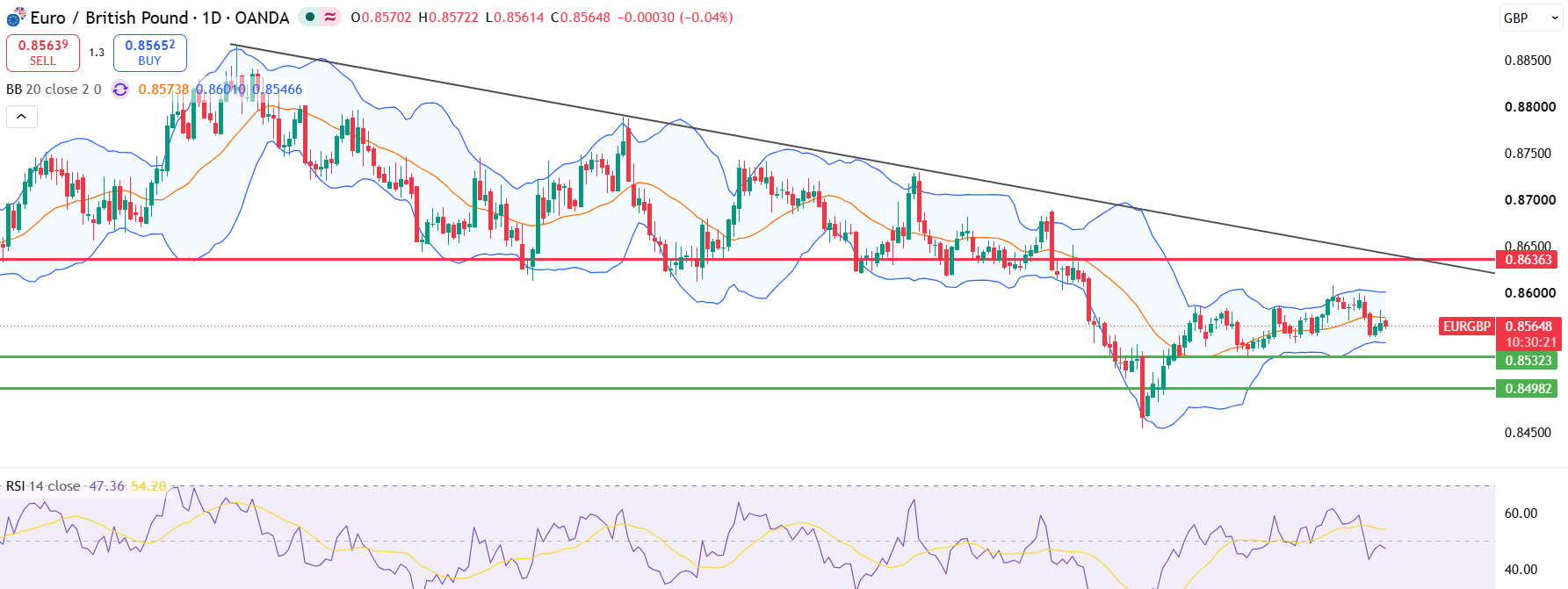
EUR/GBP struggles to sustain upward momentum ahead of the BoE decision. The latest recovery appears to be driven primarily by short covering rather than a decisive increase in spot demand.
The latest recovery appears to be driven primarily by short covering rather than a decisive increase in spot demand. That distinction is important: without stronger underlying buying momentum, the pair may struggle to extend its gains—particularly with a major Bank of England policy announcement approaching.
Bank of England Takes Centre Stage
Market attention now shifts to the Bank of England following the Federal Reserve’s decision a day earlier. The BoE is widely expected to leave the bank rate unchanged at 3.75%, but its policy guidance could prove more influential than the decision itself.
Policymakers are likely to retain a hawkish bias as rising energy costs intensify concerns about persistent price pressures. Annual CPI inflation climbed to 3.1% in August, while producer-price inflation also accelerated, complicating the outlook for monetary policy. Higher motor fuel prices, linked to the ongoing Iran conflict, and increased airfares contributed to the acceleration.
A more hawkish-than-expected message could strengthen the pound and place renewed downward pressure on EUR/GBP. Conversely, any indication that policymakers are becoming less concerned about inflation could weaken sterling and support a further rebound in the pair.
Technical Outlook: Recovery, Not Yet a Reversal
From a technical perspective, EUR/GBP remains below its 200-day simple moving average at 0.8645. This keeps the broader trend tilted to the downside despite the recent recovery.
For now, the move higher should be viewed as a correction within an established downtrend rather than the beginning of a confirmed bullish reversal. A sustained break above the 200-day SMA and nearby resistance would be needed to improve the technical outlook.
Until then, EUR/GBP remains vulnerable to renewed selling pressure, with the Bank of England’s decision likely to determine whether the rebound gains traction or begins to fade.
Warning! This material is not intended as investment advice. Past performance data does not guarantee future returns. Investing in foreign currencies may affect your returns due to their fluctuations. Any transaction in securities may result in both profits and losses. The assumptions and expectations set forth in this material are only estimates that may not be accurate and may change depending on current economic conditions. These statements do not guarantee future returns.

Meet Syam KP, a financial markets professional with more than fourteen years of experience in forex, CFDs and capital markets. Since 2012, he has worked with several brokerage firms as a trader and market strategist, developing a practical understanding of how markets move. He also holds a qualification from CISI in the United Kingdom.
At FX Junction, Syam turns complex market information into clear and useful insights. His work combines technical and fundamental analysis, portfolio management, risk management and timely commentary on global developments. Whether markets are calm or moving fast, Syam focuses on what matters most: understanding the bigger picture, spotting meaningful opportunities and keeping risk firmly in view.
Relaterte artikler
Gold Rebounds as KOSPI Selloff Triggers Halt
Gold recovers as Asian stocks fall and South Korea’s KOSPI triggers a 20-minute trading halt. The immediate question is whether a softer dollar can sustain the rebound while inflation keeps interest-rate risks in focus.
Les mer →ASML Posts Record Sales and Lifts Its Outlook
ASML reports record sales and a stronger outlook as customers expand their AI investment plans. The immediate question is whether the company can turn rising equipment demand into sustained earnings growth while increasing production capacity.
Les mer →