AUDNZD hit a fresh 13-year high: Time for a pullback?
AUDNZD surged to a new 13-year high of 1.2145. Although bullish momentum remains strong, the pair is overextended on the higher timeframe, raising concerns about the rally's sustainability and the potential for a pullback.
RBA delivers another interest rate hike
The RBA increased its cash rate by 25 basis points to 4.1%, citing persistent inflationary pressures. The decision was narrowly approved by the 9-member policy committee with a 5–4 vote. RBA governor Michele Bullock says there was “slightly” more demand in the economy, even before it made its decision to hike rates. “Higher petrol prices will add to inflation, but they’re not the reason for today’s decision,” she added.
AUDNZD technical forecast: Is a correction ahead?
Technically, upward momentum continues, but further gains may be limited. High-timeframe analysis suggests a potential pullback if the pair fails to sustain its upward trend. Despite the strong bullish momentum, the Relative Strength Index (RSI) has risen above 80 on the weekly chart, indicating the pair is extremely overbought. This suggests a short-term decline may be imminent after this strong upside move.
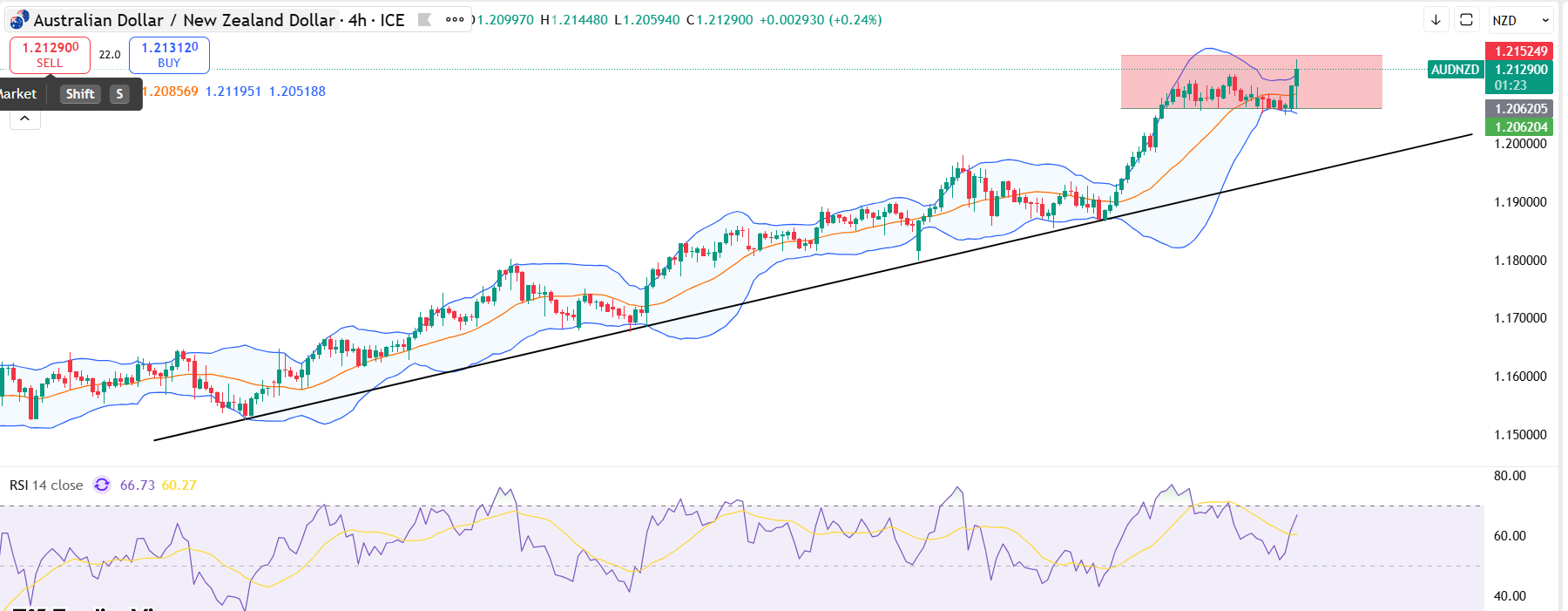
On the downside, any pullback from higher levels would initially target 1.2100, below which the price could fall to the next support level, which is around 1.2050/45. This is an area where we could see a lot of market interest, so we'll need to pay close attention. If we break below this level, we could see a significant drop, possibly as low as 1.2000/1.1980. On the upper side, if the bullish trend continues, the pair might extend its rally towards the 1.2200 supply zone.
Disclaimer! This material is not intended as investment advice. Past performance data does not guarantee future profits. Investing in foreign currencies may affect your returns due to their fluctuations. Any securities transaction may result in both profits and losses. The assumptions and expectations set forth in the material are only estimates that may not be accurate and may change according to current economic conditions. These statements do not guarantee future performance.

Syam KP
Meet Syam KP, a financial markets professional with more than fourteen years of experience in forex, CFDs and capital markets. Since 2012, he has worked with several brokerage firms as a trader and market strategist, developing a practical understanding of how markets move. He also holds a qualification from CISI in the United Kingdom.
At FX Junction, Syam turns complex market information into clear and useful insights. His work combines technical and fundamental analysis, portfolio management, risk management and timely commentary on global developments. Whether markets are calm or moving fast, Syam focuses on what matters most: understanding the bigger picture, spotting meaningful opportunities and keeping risk firmly in view.
Relaterte artikler
ASML Posts Record Sales and Lifts Its Outlook
ASML reports record sales and a stronger outlook as customers expand their AI investment plans. The immediate question is whether the company can turn rising equipment demand into sustained earnings growth while increasing production capacity.
Les mer →AI Chip Selloff Shakes Confidence in the Boom
AI chip stocks tumble as Chinese competition and financing pressures test confidence in the sector. The immediate question is whether the selloff reflects a temporary valuation reset or a more lasting threat to earnings growth.
Les mer →