Bitcoin snaps impressive 8-day winning streak
Bitcoin has declined for the second consecutive day due to uncertainty regarding central bank actions. As of this writing, Bitcoin is trading below $72,000.
Bitcoin (BTCUSD), the largest cryptocurrency in the world, exhibited a neutral to bearish trend during the early New York trading session on Wednesday after a decline in the previous session. The week started on a positive note for Bitcoin, as it reached a fresh six-week high close to $76,000 in the early Asian session on Tuesday before experiencing a slight pullback.
The cryptocurrency has declined for the second consecutive day due to uncertainty regarding central bank actions. Global markets are still grappling with unclear directions on interest rates, which is likely contributing to near-term volatility. As of this writing, Bitcoin is trading below $72,000.
Traders await Fed signals for next steps
The March Federal Open Market Committee (FOMC) policy statement is scheduled for release at 18:00 GMT, followed by Fed Chair Jerome Powell’s press conference at 18:30 GMT. The outcomes of today’s Fed meeting and Powell’s comments will be crucial and essential in terms of further educating crypto markets in terms of direction, with their discussion on policy likely to influence market volatility. Investors are particularly focused on any revisions to the US central bank’s economic projections and whether the outlook for two rate cuts this year remains intact.
$BTCUSD: Short-term technical outlook
From a technical perspective, even with the recent pullback, the short-term momentum appears to remain neutral to bullish, as the price is holding above the 20-day and 50-day moving averages. The four-hour chart indicates that Bitcoin has been experiencing a modest bullish trend recently, particularly after finding robust buying support near the $65,000 demand zone.
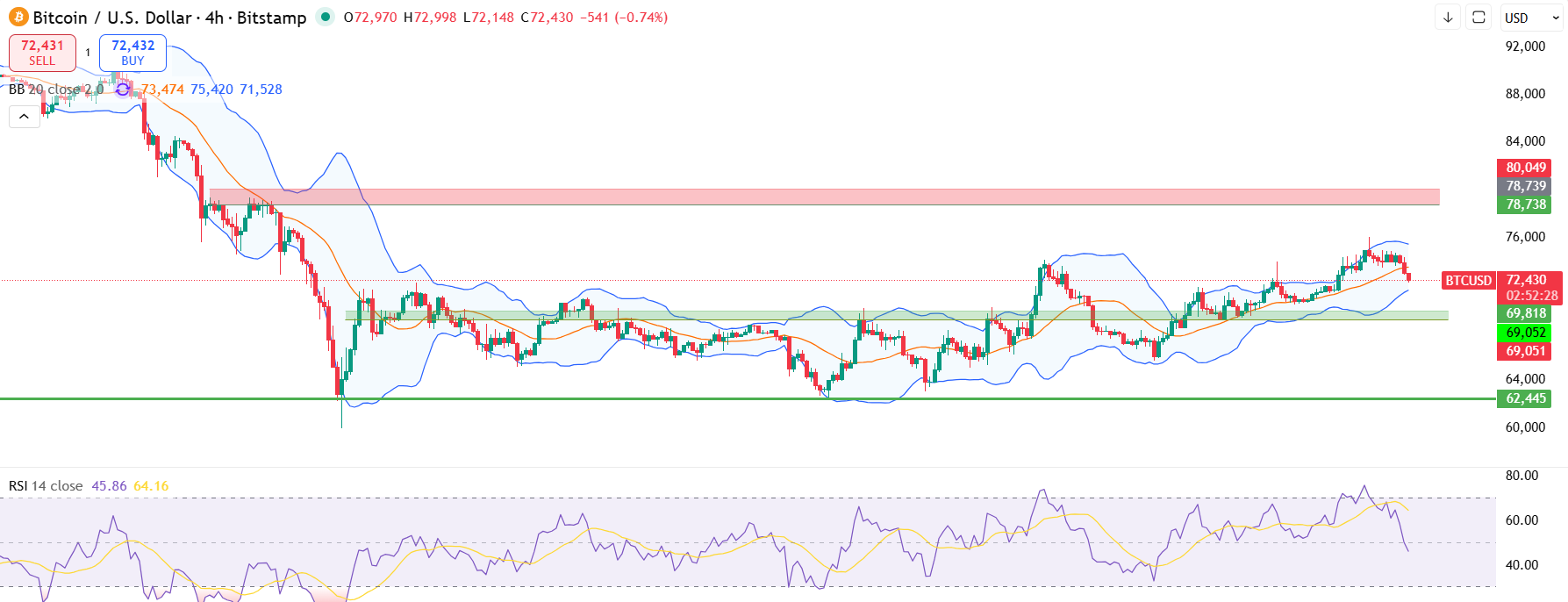
However, for further gains, Bitcoin needs to break above the $76,000 resistance level. A sustained move above this barrier could propel the price toward the next resistance at $80,000. On the downside, sellers will monitor any drop below $70,000 closely, as a close below this key level could trigger a sharper decline toward the $65,000 demand zone.
Warning! This material is not intended as investment advice. Past performance data does not guarantee future profits. Investing in foreign currencies may affect your returns due to their fluctuations. Any transaction in securities may result in both profits and losses. The assumptions and expectations set forth in this material are only estimates that may not be accurate and may change depending on current economic conditions. These statements do not guarantee future returns.

Syam KP
Meet Syam KP, a financial markets professional with more than fourteen years of experience in forex, CFDs and capital markets. Since 2012, he has worked with several brokerage firms as a trader and market strategist, developing a practical understanding of how markets move. He also holds a qualification from CISI in the United Kingdom.
At FX Junction, Syam turns complex market information into clear and useful insights. His work combines technical and fundamental analysis, portfolio management, risk management and timely commentary on global developments. Whether markets are calm or moving fast, Syam focuses on what matters most: understanding the bigger picture, spotting meaningful opportunities and keeping risk firmly in view.
Related Articles
ASML Posts Record Sales and Lifts Its Outlook
ASML reports record sales and a stronger outlook as customers expand their AI investment plans. The immediate question is whether the company can turn rising equipment demand into sustained earnings growth while increasing production capacity.
Read More →AI Chip Selloff Shakes Confidence in the Boom
AI chip stocks tumble as Chinese competition and financing pressures test confidence in the sector. The immediate question is whether the selloff reflects a temporary valuation reset or a more lasting threat to earnings growth.
Read More →