AUD/USD bounces back to 0.7100, but there is a catch
AUD/USD is attempting to stabilize around 0.7090 after a strong rebound on Thursday. However, it is premature to conclude that the consolidation phase dominated by the Aussie has ended.
What's next for Aussie?
Currently, AUD/USD is attempting to stabilize around 0.7090 after a strong rebound on Thursday. However, it is premature to conclude that the consolidation phase dominated by the Aussie has ended. Bulls are struggling to sustain momentum, with upside volume remaining weak—an important factor to monitor closely. Additionally, downside risks persist amid ongoing geopolitical tensions. As such, the recent bounce appears corrective rather than the start of a new upward trend. A decisive break above the 0.7200 resistance zone will be necessary to signal a shift in the current consolidation pattern.
AUDUSD technical forecast: Upside momentum remains limited
The currency pair has been consolidating sideways over the past few trading hours following its recent surge. Despite the rebound, there is a risk that AUD/USD could revisit the 0.7000 support level if bulls fail to extend gains. It is important to note that aggressive short positions should only be considered below 0.7000, which is a key area likely to attract significant market interest.
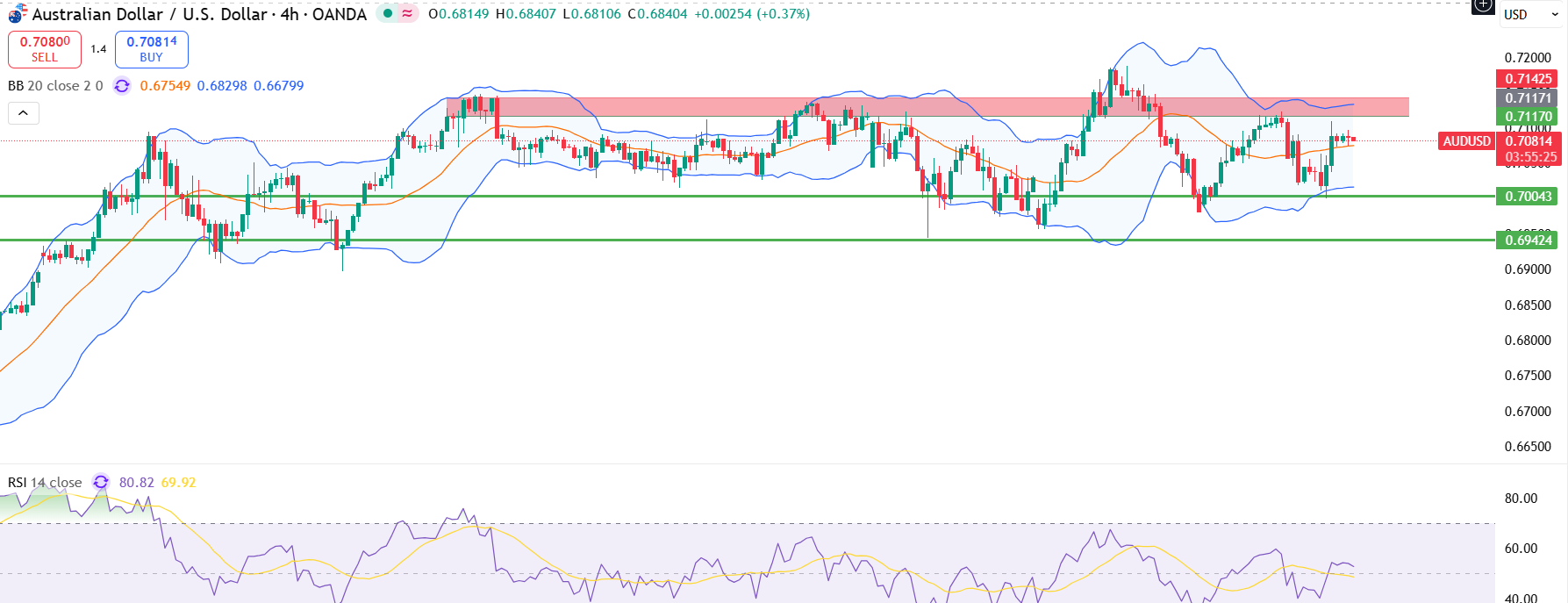
A breakdown below 0.7000 could open the door to a more substantial decline, potentially targeting the 0.6940–0.6920 zone. Conversely, if the pair regains upside momentum and breaks above the 0.7140–0.7150 range, it may advance toward the next major resistance near 0.7190–0.7200.
Disclaimer! This material is not intended as investment advice. Past performance data does not guarantee future profits. Investing in foreign currencies may affect your returns due to their fluctuations. Any securities transaction may result in both profits and losses. The assumptions and expectations set forth in the material are only estimates that may not be accurate and may change according to current economic conditions. These statements do not guarantee future performance.

Syam KP
Meet Syam KP, a financial markets professional with more than fourteen years of experience in forex, CFDs and capital markets. Since 2012, he has worked with several brokerage firms as a trader and market strategist, developing a practical understanding of how markets move. He also holds a qualification from CISI in the United Kingdom.
At FX Junction, Syam turns complex market information into clear and useful insights. His work combines technical and fundamental analysis, portfolio management, risk management and timely commentary on global developments. Whether markets are calm or moving fast, Syam focuses on what matters most: understanding the bigger picture, spotting meaningful opportunities and keeping risk firmly in view.
Related Articles
ASML Posts Record Sales and Lifts Its Outlook
ASML reports record sales and a stronger outlook as customers expand their AI investment plans. The immediate question is whether the company can turn rising equipment demand into sustained earnings growth while increasing production capacity.
Read More →AI Chip Selloff Shakes Confidence in the Boom
AI chip stocks tumble as Chinese competition and financing pressures test confidence in the sector. The immediate question is whether the selloff reflects a temporary valuation reset or a more lasting threat to earnings growth.
Read More →