Gold price is coiling near the $4000 support: What now?
Following the initial decline, the metal rebounded effectively after the release of softer-than-expected US inflation data. The Consumer Price Index (CPI) figures largely diminished expectations of a rate hike in July, even as Federal Reserve Chair Kevin Warsh reaffirmed his commitment to achieving price stability. However, the upward momentum waned, and the metal faced renewed selling pressure on Thursday, retreating toward the lower end of its recent trading range.
Momentum Diminishes on Renewed Middle East Tensions
The metal retreated below the $4,000 threshold amid renewed US-Iran tensions. Recent military exchanges boosted demand for the US dollar and pushed global energy prices higher. Rising crude oil prices have heightened inflation concerns, leading to increased US Treasury yields and reinforcing expectations that the Federal Reserve may maintain restrictive monetary policy for an extended period. Additionally, the US dollar gained further strength following robust economic data, including a stronger-than-expected Philadelphia Fed survey reading of 41.4 and a drop in jobless claims to 208,000, which tempered hopes for early monetary easing.
Gold (XAUUSD) Technical Outlook
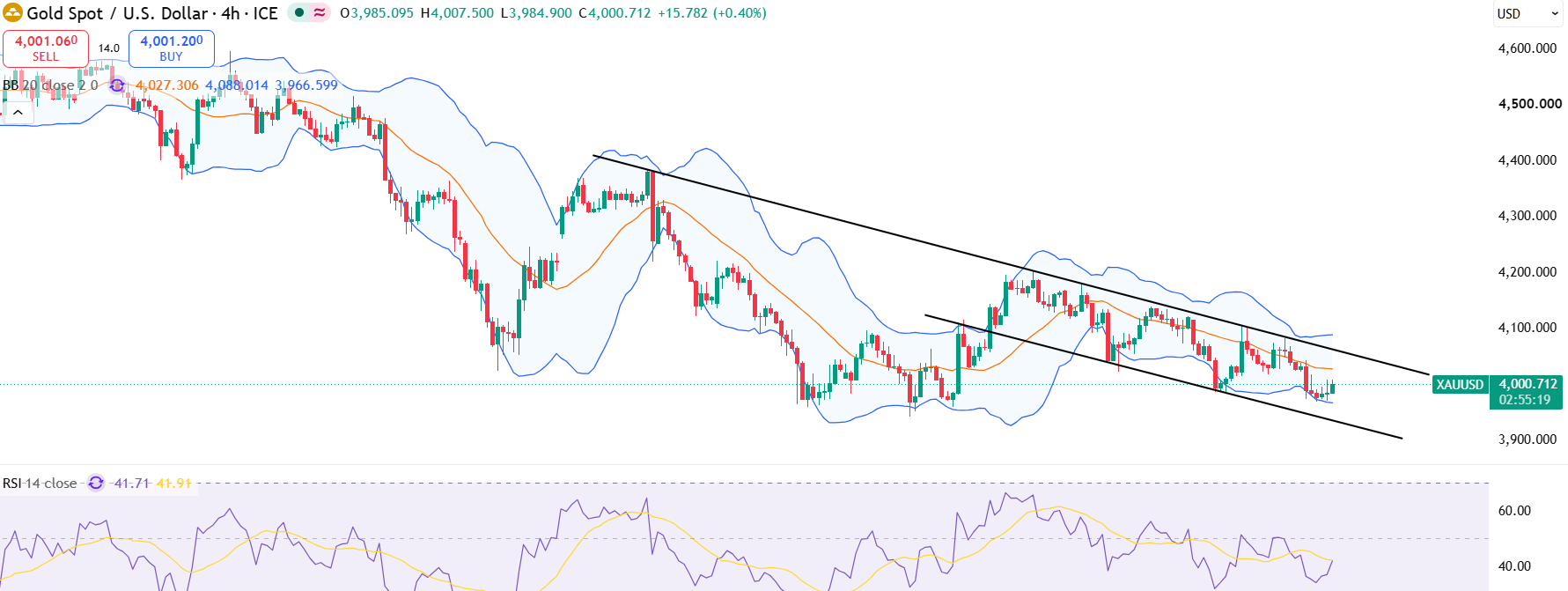
Gold prices are currently stalled below the critical $4,000 support level, raising concerns of a prolonged downturn as bearish sentiment intensifies. Recent recovery attempts have been capped near key trendline resistance, indicating that sellers continue to dominate market momentum.
The metal remains vulnerable to further declines if this trend persists, with initial support likely around $3,970. Continued selling pressure could push prices further down to the secondary support zone between $3,940 and $3,920. On the upper side, a decisive close above $4,100 is necessary to alleviate bearish pressures. A sustained break above this level could weaken the immediate downtrend and potentially support a broader recovery toward the $4,200 to $4,240 range.
Warning! This material is not intended as investment advice. Past performance data does not guarantee future returns. Investing in foreign currencies may affect your returns due to their fluctuations. Any transaction in securities may result in both profits and losses. The assumptions and expectations set forth in this material are only estimates that may not be accurate and may change depending on current economic conditions. These statements do not guarantee future returns.

Meet Syam KP, a financial markets professional with more than fourteen years of experience in forex, CFDs and capital markets. Since 2012, he has worked with several brokerage firms as a trader and market strategist, developing a practical understanding of how markets move. He also holds a qualification from CISI in the United Kingdom.
At FX Junction, Syam turns complex market information into clear and useful insights. His work combines technical and fundamental analysis, portfolio management, risk management and timely commentary on global developments. Whether markets are calm or moving fast, Syam focuses on what matters most: understanding the bigger picture, spotting meaningful opportunities and keeping risk firmly in view.
Related Articles
Anthropic's Record $81 Billion IPO Loses Momentum After 34% Opening Surge
Anthropic shares surge during their Nasdaq debut before surrendering much of their early gains. Despite completing the largest initial public offering on record, the company's volatile first trading session raises questions about whether investor enthusiasm can sustain valuations amid rising AI infrastructure costs.
Read More →Australian Dollar Hits 10-Month Low as Unemployment Rises to 4.9%
The Australian dollar falls sharply after unemployment reaches its highest level in five years. With employment declining for a second consecutive month, investors are abandoning expectations of further interest-rate increases and increasingly pricing in cuts for 2027.
Read More →