Gold slides below $4100: Will price recover or drop further?
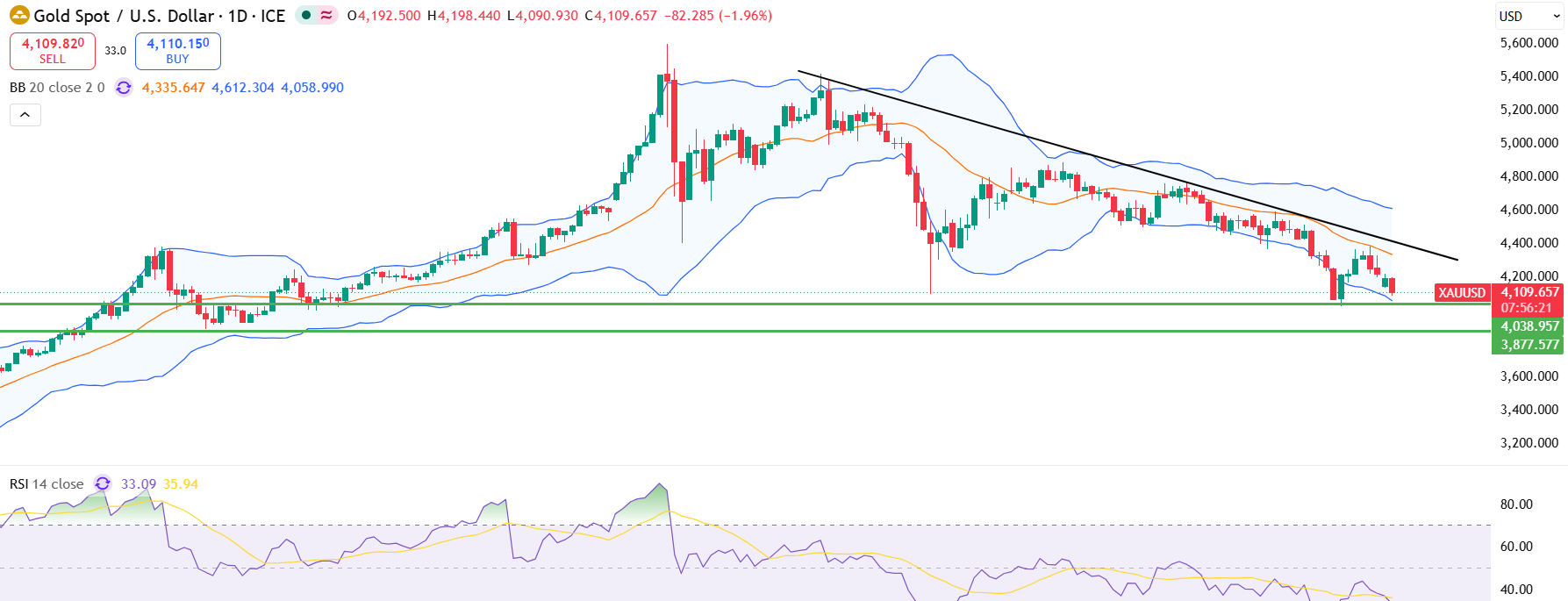
The gold price is correcting the losses, although its attempts to move higher appear limited as the price is trading below the major moving averages, with the overall trend still favoring sellers.
What is driving gold prices lower?
The repricing of Federal Reserve rate cut expectations has unsettled some gold bulls, prompting bears to push prices sharply lower. Additionally, easing U.S.-Iran tensions has reduced demand for the safe-haven metal. At the same time, analysis of the dollar strength index reveals that the ongoing selloff in gold and silver is primarily driven by broad-based dollar strength. Rising bond yields continue to pose a significant headwind for non-yielding assets like gold.
Fundamentally, gold is expected to experience heightened volatility this week due to a busy economic calendar, with particular focus on Thursday’s U.S. PCE inflation report. For today, attention shifts to the North American session, where U.S. Flash manufacturing and services PMIs will be released. Significant deviations from forecasts in these PMI readings could trigger increased market volatility. Investors will also closely monitor comments from Federal Reserve officials for further insight into future monetary policy direction.
Gold (XAUUSD) Technical Analysis
Technically, gold remains under strong bearish pressure following its sharp decline from $4,380. Prices are trading below major moving averages, with the overall trend favoring sellers. Recent price action suggests continued seller dominance, as every bullish retracement has been met with renewed selling pressure. A four-hour close below the $4,100 support level would increase the likelihood of a further decline toward the $4,000–$3,950 range. The $4,050/30 level may provide interim support before that. On the upside, bulls would need to push prices back above the significant resistance zone near $4,270–$4,280 within the same timeframe to reverse the current bearish trend and alter the bearish consolidation outlook.
Warning! This material is not intended as investment advice. Past performance data does not guarantee future returns. Investing in foreign currencies may affect your returns due to their fluctuations. Any transaction in securities may result in both profits and losses. The assumptions and expectations set forth in this material are only estimates that may not be accurate and may change depending on current economic conditions. These statements do not guarantee future returns.

Meet Syam KP, a financial markets professional with more than fourteen years of experience in forex, CFDs and capital markets. Since 2012, he has worked with several brokerage firms as a trader and market strategist, developing a practical understanding of how markets move. He also holds a qualification from CISI in the United Kingdom.
At FX Junction, Syam turns complex market information into clear and useful insights. His work combines technical and fundamental analysis, portfolio management, risk management and timely commentary on global developments. Whether markets are calm or moving fast, Syam focuses on what matters most: understanding the bigger picture, spotting meaningful opportunities and keeping risk firmly in view.
Related Articles
Gold Rebounds as KOSPI Selloff Triggers Halt
Gold recovers as Asian stocks fall and South Korea’s KOSPI triggers a 20-minute trading halt. The immediate question is whether a softer dollar can sustain the rebound while inflation keeps interest-rate risks in focus.
Read More →ASML Posts Record Sales and Lifts Its Outlook
ASML reports record sales and a stronger outlook as customers expand their AI investment plans. The immediate question is whether the company can turn rising equipment demand into sustained earnings growth while increasing production capacity.
Read More →