EURUSD Slides Toward 1.14 as Dollar Strength Puts the Euro Under Pressure
EUR/USD remains under pressure as a stronger US dollar pushes the pair toward the closely watched 1.1400 level. For now, the question is whether 1.1400 holds as support.
The Federal Reserve raised its target interest rate by a quarter percentage point earlier this month, to 3.75%–4.00%. The prospect of further tightening gives traders a reason to favor the dollar: higher US interest rates can make dollar-denominated assets more attractive. That relationship is not automatic, but it helps explain why Fed policy remains central to the EUR/USD outlook.
German PMI Sends a Mixed Signal
September’s preliminary German purchasing managers’ indexes delivered contrasting signals. The manufacturing PMI fell to 53.8 from 54.3 in August, slightly below the expected reading of 54. The sector remains in expansion territory, but its pace of improvement has eased.
Services moved in the opposite direction. The flash services PMI climbed to 52.9 from 49.7, returning above the 50-point line that separates expansion from contraction. The rebound suggests that business activity improved after five months of decline.
Together, those readings make it difficult to draw a simple conclusion about German growth. The services recovery is encouraging, while the manufacturing slowdown raises questions about whether recent industrial strength can continue. For EUR/USD, even better European data may struggle to lift the euro if demand for the dollar stays firm.
What Could Move EUR/USD Next?
Germany’s IFO business climate report is scheduled for Thursday, September 24. It will offer another view of how German companies assess current conditions and the months ahead. Comments from European Central Bank policymakers will also draw attention, though the dollar’s direction is likely to remain central to EUR/USD’s near-term moves.
Technically, the immediate focus is 1.1400. A sustained break below that level could open the way toward 1.1360–1.1340. On the other hand, a brief dip below 1.1400 followed by a recovery would send a different signal: buyers may still be willing to defend the area. If buyers hold that lower zone and the pair forms a recovery pattern, 1.1470 and 1.1500 become the levels to watch on a rebound.
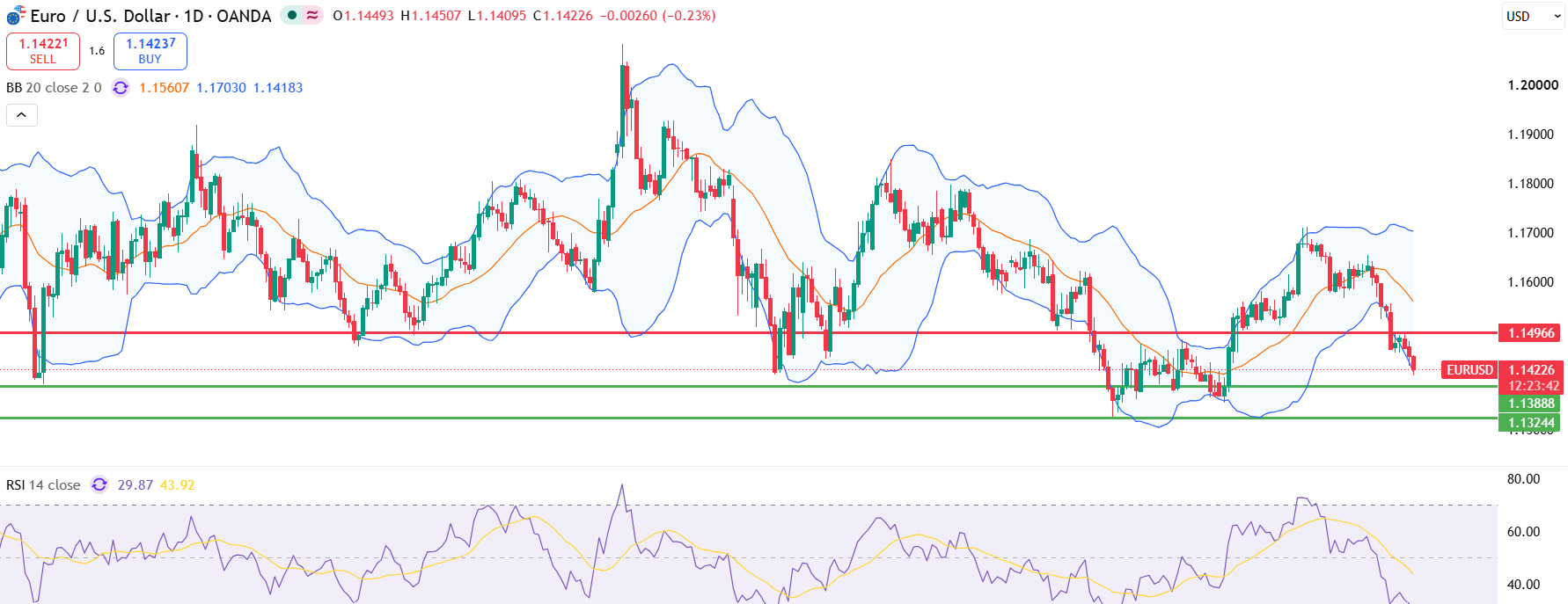
For now, the question is whether 1.1400 holds as support. The answer will help determine whether the current decline extends or gives way to a more durable euro recovery.
Warning! This material is not intended as investment advice. Past performance data does not guarantee future returns. Investing in foreign currencies may affect your returns due to their fluctuations. Any transaction in securities may result in both profits and losses. The assumptions and expectations outlined in this material are only estimates that may not be accurate and may change depending on current economic conditions. These statements do not guarantee future returns.

Meet Syam KP, a financial markets professional with more than fourteen years of experience in forex, CFDs and capital markets. Since 2012, he has worked with several brokerage firms as a trader and market strategist, developing a practical understanding of how markets move. He also holds a qualification from CISI in the United Kingdom.
At FX Junction, Syam turns complex market information into clear and useful insights. His work combines technical and fundamental analysis, portfolio management, risk management and timely commentary on global developments. Whether markets are calm or moving fast, Syam focuses on what matters most: understanding the bigger picture, spotting meaningful opportunities and keeping risk firmly in view.
Related Articles
Gold Rebounds as KOSPI Selloff Triggers Halt
Gold recovers as Asian stocks fall and South Korea’s KOSPI triggers a 20-minute trading halt. The immediate question is whether a softer dollar can sustain the rebound while inflation keeps interest-rate risks in focus.
Read More →ASML Posts Record Sales and Lifts Its Outlook
ASML reports record sales and a stronger outlook as customers expand their AI investment plans. The immediate question is whether the company can turn rising equipment demand into sustained earnings growth while increasing production capacity.
Read More →