Oracle’s Rebound Continues Ahead of Earnings: Is Further Recovery on the Horizon?
The true test of Oracle’s recovery will come with the release of its fiscal first-quarter 2027 earnings report, scheduled after market close on September 10. The results will provide critical insights into whether the company’s substantial AI infrastructure expansion is sustainable.
Despite a challenging year, Oracle remains in the spotlight. Investors are particularly focused on the performance of Oracle Cloud Infrastructure (OCI), viewing its revenue growth as a key indicator of demand driven by advancements in artificial intelligence.
Investor Focus Shifts to AI and Cloud Growth
Oracle’s stock rallied nearly 15% last month, fueled largely by renewed enthusiasm surrounding the company’s AI and cloud computing initiatives. This optimism reflects growing confidence in Oracle’s strategic investments aimed at expanding its cloud platform and AI infrastructure capabilities. As the company increases capital expenditures, market observers will also be closely monitoring its debt levels to assess financial health amid this aggressive growth phase.
Assessing the Sustainability of Oracle’s Momentum
The true test of Oracle’s recovery will come with the release of its fiscal first-quarter 2027 earnings report, scheduled after market close on September 10. The results will provide critical insights into whether the company’s substantial AI infrastructure expansion is sustainable. The market anticipates revenue of approximately $19.1 billion, representing roughly 28% year-over-year growth, with AI cloud guidance projecting 58% growth following last quarter’s 93% surge in AI cloud revenue.
Technical Landscape
From a technical perspective, Oracle’s momentum remains constructive yet cautious. The stock is currently trading below its 200-day simple moving average (SMA) of $168.50, indicating that recent gains may represent a recovery attempt rather than a confirmed uptrend. A decisive and sustained close above this 200-day SMA would be a bullish signal, potentially enhancing Oracle’s medium-term technical outlook. If the stock surpasses this threshold, the next significant resistance level to monitor would be $182, a key Fibonacci retracement target before the $200 psychological level.
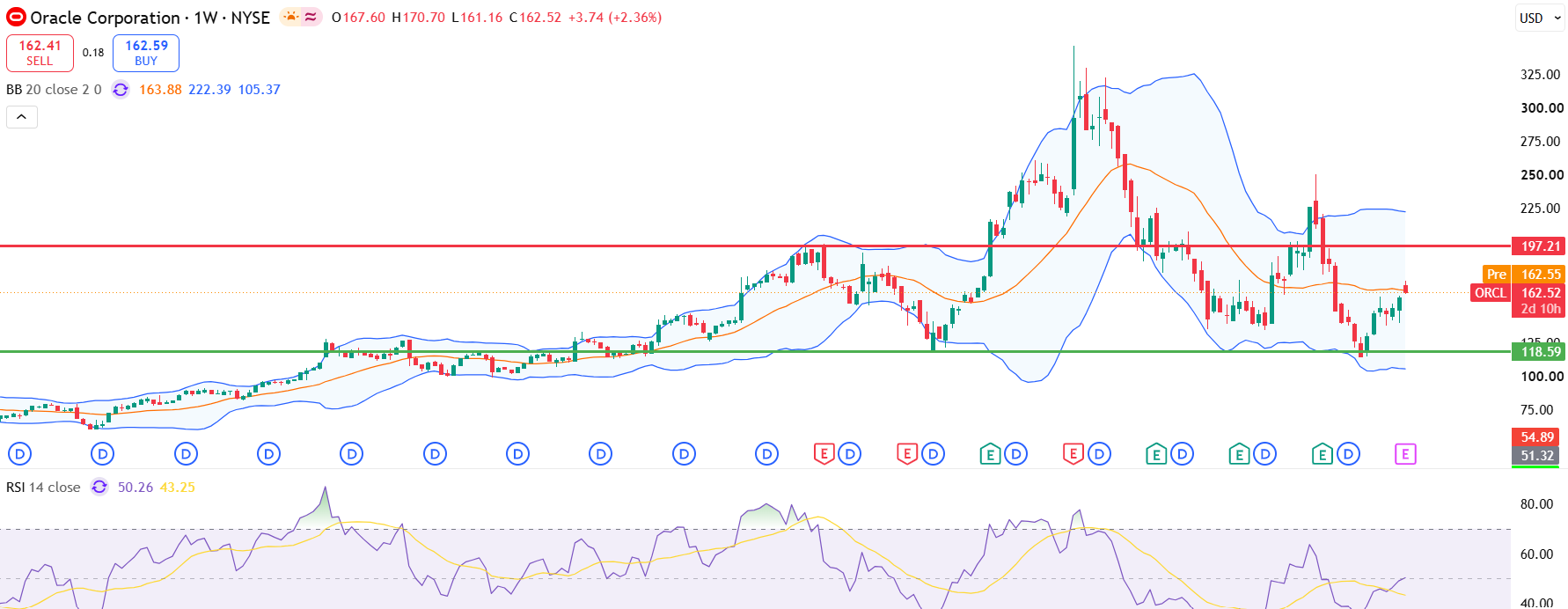
Overall, the technical outlook presents a balanced risk-reward scenario. While momentum indicators suggest improvement, cautious investors may prefer to await clear confirmation of a breakout before fully committing. The 200-day SMA remains a crucial benchmark, serving as a litmus test for the durability of Oracle’s recent recovery and its prospects for further gains.
Conclusion
Oracle’s upcoming earnings report is poised to be a defining moment for the company’s stock and its positioning within the AI cloud infrastructure space. With significant investments underway and rising market expectations, the report could either validate Oracle’s growth trajectory or raise questions about the sustainability of its expansion.
Warning! This material is not intended as investment advice. Past performance data does not guarantee future returns. Investing in foreign currencies may affect your returns due to their fluctuations. Any transaction in securities may result in both profits and losses. The assumptions and expectations set forth in this material are only estimates that may not be accurate and may change depending on current economic conditions. These statements do not guarantee future returns.

Meet Syam KP, a financial markets professional with more than fourteen years of experience in forex, CFDs and capital markets. Since 2012, he has worked with several brokerage firms as a trader and market strategist, developing a practical understanding of how markets move. He also holds a qualification from CISI in the United Kingdom.
At FX Junction, Syam turns complex market information into clear and useful insights. His work combines technical and fundamental analysis, portfolio management, risk management and timely commentary on global developments. Whether markets are calm or moving fast, Syam focuses on what matters most: understanding the bigger picture, spotting meaningful opportunities and keeping risk firmly in view.
Related Articles
Gold Rebounds as KOSPI Selloff Triggers Halt
Gold recovers as Asian stocks fall and South Korea’s KOSPI triggers a 20-minute trading halt. The immediate question is whether a softer dollar can sustain the rebound while inflation keeps interest-rate risks in focus.
Read More →ASML Posts Record Sales and Lifts Its Outlook
ASML reports record sales and a stronger outlook as customers expand their AI investment plans. The immediate question is whether the company can turn rising equipment demand into sustained earnings growth while increasing production capacity.
Read More →