Stronger UK GDP gives sterling breathing room ahead of US data
UK growth revised higher
The UK economy expanded by 0.5% in the second quarter, the Office for National Statistics said, revising its initial estimate of 0.4%. Economists had expected the earlier reading to remain unchanged.
On an annual basis, UK GDP expanded 1.4%, accelerating from a revised 0.8% growth in Q1. The revisions suggest the economy entered the second half of the year on a firmer footing than previously thought, providing some sterling support.
Softer US data weigh on the dollar
The dollar eased from a two-month high as weaker-than-expected US figures and cautious Federal Reserve commentary tempered expectations for further interest-rate increases.
The Conference Board’s Consumer Confidence Index fell to 81.9 in September from 88.6 in August, its lowest reading since April 2014. Separately, the Job Openings and Labor Turnover Survey showed vacancies declined to 7.079 million in August, below the 7.225 million forecast in a Reuters poll. Together, the reports pointed to weakening household sentiment and softer demand for workers.
ADP and PCE take centre stage
Attention now turns to Wednesday’s US releases, including ADP’s September private-sector employment report and August personal consumption expenditures inflation data. The final estimate of second-quarter US GDP is also scheduled for release.
Core PCE inflation, which excludes food and energy, will be particularly important for assessing underlying price pressures. Strong hiring and persistent inflation could revive expectations of further Fed tightening and support the dollar. Weaker employment growth and easing inflation could give sterling’s recovery more room to develop.
Month-end and quarter-end portfolio adjustments may also amplify short-term currency moves, making the session’s price action harder to interpret.
GBP/USD outlook: 1.3340 remains the next test
The recovery from the 1.3200 area suggests selling pressure has eased, but the bounce alone does not establish a sustained reversal.
The immediate focus is 1.3340. A sustained move above that level would strengthen the case for a broader recovery, while rejection could leave the pair vulnerable to another test of 1.3200.
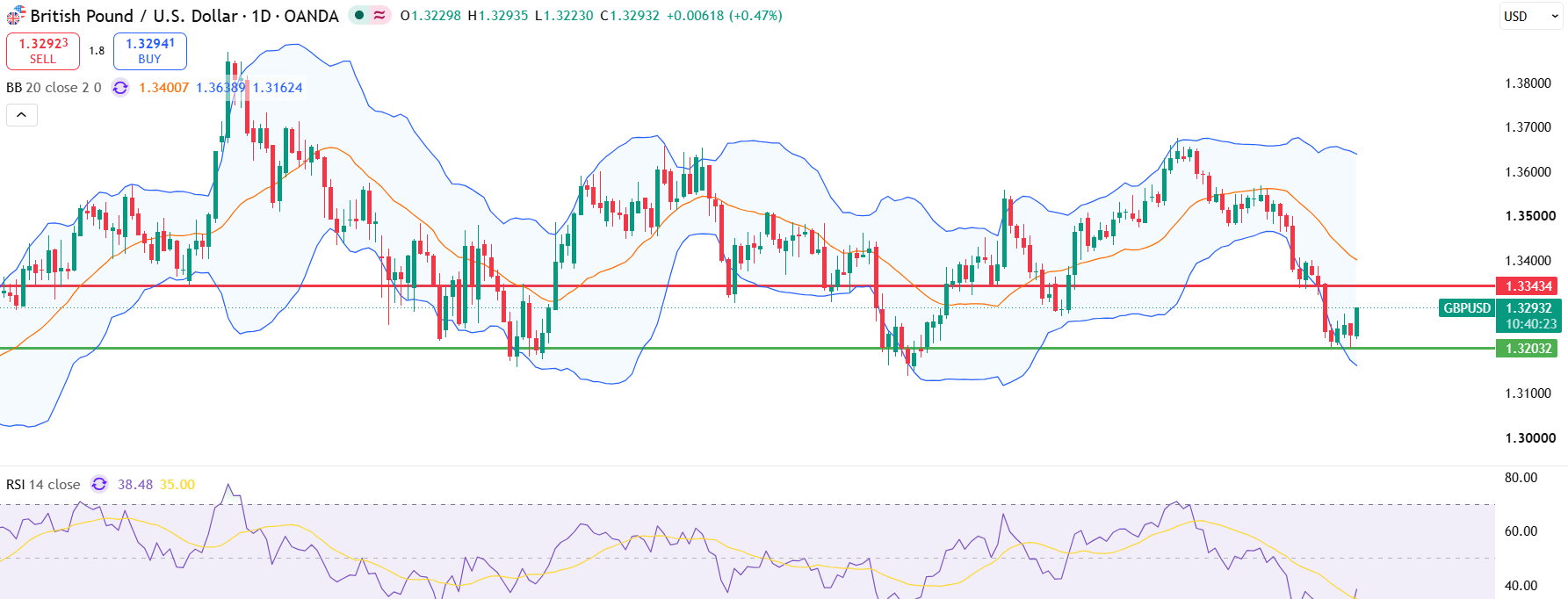
For now, the outlook remains tentative: stronger UK growth has given sterling breathing room, but the next move will depend heavily on US data and the dollar’s response.
Warning! This material is not intended as investment advice. Past performance data does not guarantee future returns. Investing in foreign currencies may affect your returns due to their fluctuations. Any transaction in securities may result in both profits and losses. The assumptions and expectations set forth in this material are only estimates that may not be accurate and may change depending on current economic conditions. These statements do not guarantee future returns.

Meet Syam KP, a financial markets professional with more than fourteen years of experience in forex, CFDs and capital markets. Since 2012, he has worked with several brokerage firms as a trader and market strategist, developing a practical understanding of how markets move. He also holds a qualification from CISI in the United Kingdom.
At FX Junction, Syam turns complex market information into clear and useful insights. His work combines technical and fundamental analysis, portfolio management, risk management and timely commentary on global developments. Whether markets are calm or moving fast, Syam focuses on what matters most: understanding the bigger picture, spotting meaningful opportunities and keeping risk firmly in view.
Related Articles
AI Funding Fears Send Tech Selloff into Asia
Asian technology shares fall after a sharp Wall Street selloff as investors question the financing behind enormous AI investment plans. The immediate question is whether future cash generation can justify the spending and valuations supporting the sector.
Read More →Gold Falls Below $4,100 as Oil Rises
Gold falls below $4,100 as rising oil prices fuel inflation concerns. The immediate question for bullion is whether those pressures will keep U.S. interest rates elevated for longer.
Read More →