USDJPY stabilizing near 159: What next after rebound from 155?
USDJPY Fundamental Overview
Following official intervention by the Japanese government and the Bank of Japan in the foreign exchange market, USDJPY experienced a sharp decline to the critical 155 support level by the end of April. However, the pair has since retraced nearly all post-intervention losses and is currently trading near the 159.00 area.
The recent strength of the US dollar, combined with higher-than-expected US inflation, has weighed on the Japanese yen. USDJPY gained significantly last week as strong US inflation data reduced expectations of an imminent Federal Reserve rate reduction. Hawkish comments from Federal Reserve policymakers and the FOMC minutes further contributed to the dollar’s strength. The US Dollar Index, which measures the greenback against a basket of major currencies, reached a six-week high of 99.40 on Wednesday.
Watch price action near 159 for the next move
After a sharp rebound from the post-BoJ intervention decline, USDJPY is now stabilising near the significant resistance level of 159, with early indications of short-term rejection as intervention risks cap gains around 159.00/50. As long as this resistance holds, a short-term pullback is possible; however, the broader trend warrants caution.
Technically, decreased trade volume indicates limited bullish momentum. As a result, if buyers fail to sustain the gains, the pair may visit the immediate support levels at 158.30 and 158.00/157.50. Nonetheless, rapid falls frequently provide good purchasing opportunities. As such, a retreat can be viewed as a possible buying opportunity as long as the price does not fall below the 155 mark.
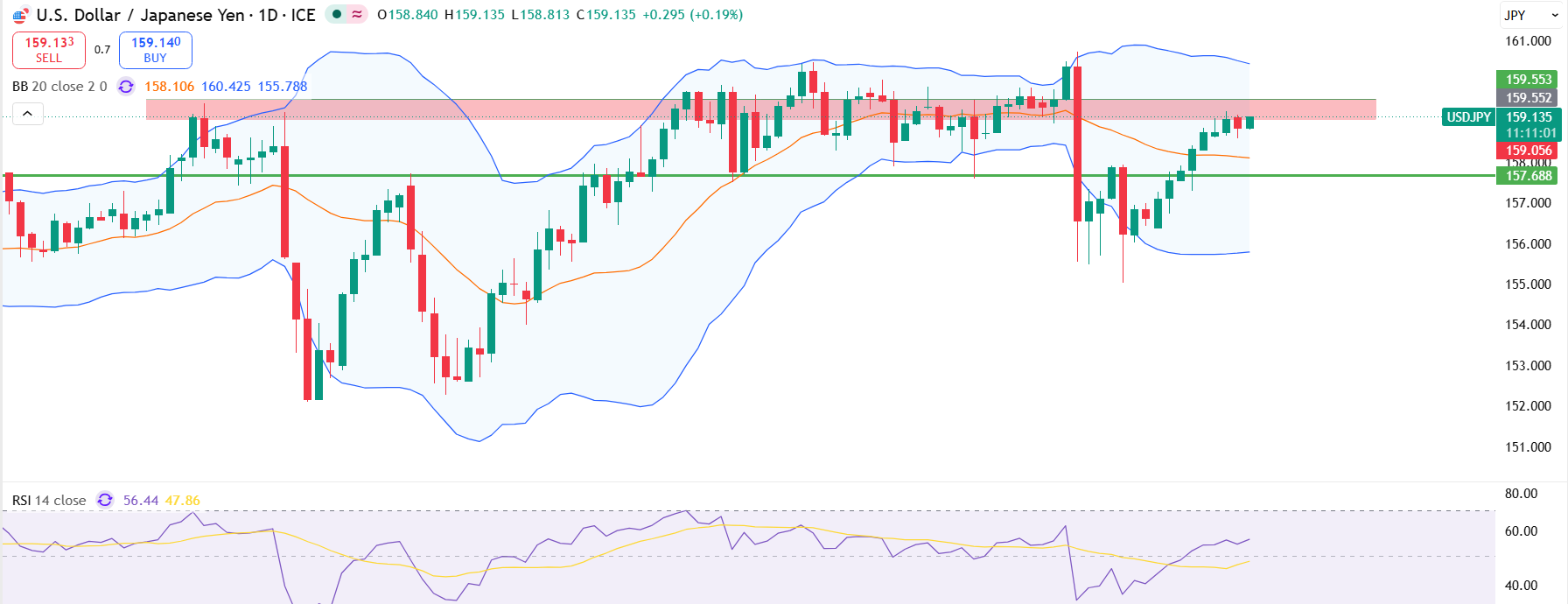
In summary, USDJPY is consolidating in a narrow range following its recent rebound, reflecting market indecision as traders await the next directional trigger. Traders must monitor ongoing US-Iran peace negotiations and any verbal intervention from the Bank of Japan. Recently, several Japanese officials have indicated that, should volatility persist, policymakers are prepared to intervene in the foreign exchange market as frequently as necessary to stabilise the yen.
Warning! This material is not intended as investment advice. Past performance data does not guarantee future returns. Investing in foreign currencies may affect your returns due to their fluctuations. Any transaction in securities may result in both profits and losses. The assumptions and expectations set forth in this material are only estimates that may not be accurate and may change depending on current economic conditions. These statements do not guarantee future returns.

Meet Syam KP, a financial markets professional with more than fourteen years of experience in forex, CFDs and capital markets. Since 2012, he has worked with several brokerage firms as a trader and market strategist, developing a practical understanding of how markets move. He also holds a qualification from CISI in the United Kingdom.
At FX Junction, Syam turns complex market information into clear and useful insights. His work combines technical and fundamental analysis, portfolio management, risk management and timely commentary on global developments. Whether markets are calm or moving fast, Syam focuses on what matters most: understanding the bigger picture, spotting meaningful opportunities and keeping risk firmly in view.
Related Articles
Sanofi Agrees to Buy Insmed for $41 Billion
Sanofi agrees to buy Insmed for $41 billion in cash, expanding its portfolio of respiratory medicines. The immediate question is whether established treatments and experimental drugs can generate enough growth to justify the price and financing costs.
Read More →Nasdaq 100 Futures Rebound 3% After Tech Selloff
Nasdaq 100 futures rebound about 3% after a steep sell-off in technology shares. The immediate question is whether renewed buying can develop into a sustained recovery while concerns about AI spending and financing remain unresolved.
Read More →