Gold Holds Above $4,100 as Softer US Jobs Data Supports Recovery
Gold is attempting to recover, but the strength of the rebound will depend on whether buyers can defend the $4,100 area and overcome nearby resistance.
The key question is whether slower hiring will lead to a sustained easing of financial conditions. A lower probability of an October rate hike supports bullion, but a durable recovery will require confirmation from economic data, yields and price action.
Softer employment strengthens the case for Fed caution
The September employment report, released by the Bureau of Labor Statistics on October 2, showed nonfarm payroll growth of 29,000. August’s gain was revised to 133,000, while July’s figure was revised to a decline of 10,000. Together, those revisions reduced previously reported employment growth by 60,000 jobs. The unemployment rate edged up from 4.1% to 4.2%.
The figures strengthen the case for a cautious Fed approach. Slower hiring may reduce the urgency for further tightening, while moderate wage growth could ease one source of inflation pressure.
For gold, that backdrop is supportive—but its impact will depend on whether policy expectations translate into lower yields and a softer dollar.
Treasury yields and the dollar remain key
The bond market’s response complicates a straightforward bullish reading of the jobs report. Treasury yields initially fell after Friday’s release, then rose as selling resumed.
Dollar strength presents another obstacle, making gold more expensive for buyers using other currencies. A sustained decline in the dollar and real yields would provide a more favorable backdrop for bullion. Renewed strength in both would make it harder for the recovery to gain momentum.
Fed minutes take center stage
Wednesday’s release of the September FOMC minutes is a key policy catalyst this week. Investors will examine how officials balanced inflation concerns against emerging employment risks and whether hawkish dissents reflected firm support for tighter policy.
The minutes could clarify the conditions policymakers considered necessary for another rate increase. Evidence of greater concern about the labor market would support the case for caution, while a continued emphasis on inflation risks could keep expectations for further tightening alive.
ISM Services PMI will test the slowdown narrative
The September US ISM Services PMI will offer another test of the economic slowdown narrative. Beyond the headline reading, the employment, new orders and prices indexes will help investors assess whether weaker payroll growth signals broader cooling.
Softer activity and easing price pressure would reinforce the case for Fed caution. Resilient demand and elevated prices, however, could sustain expectations for further tightening and constrain gold’s recovery.
XAU/USD outlook: $4,100 anchors the recovery scenario
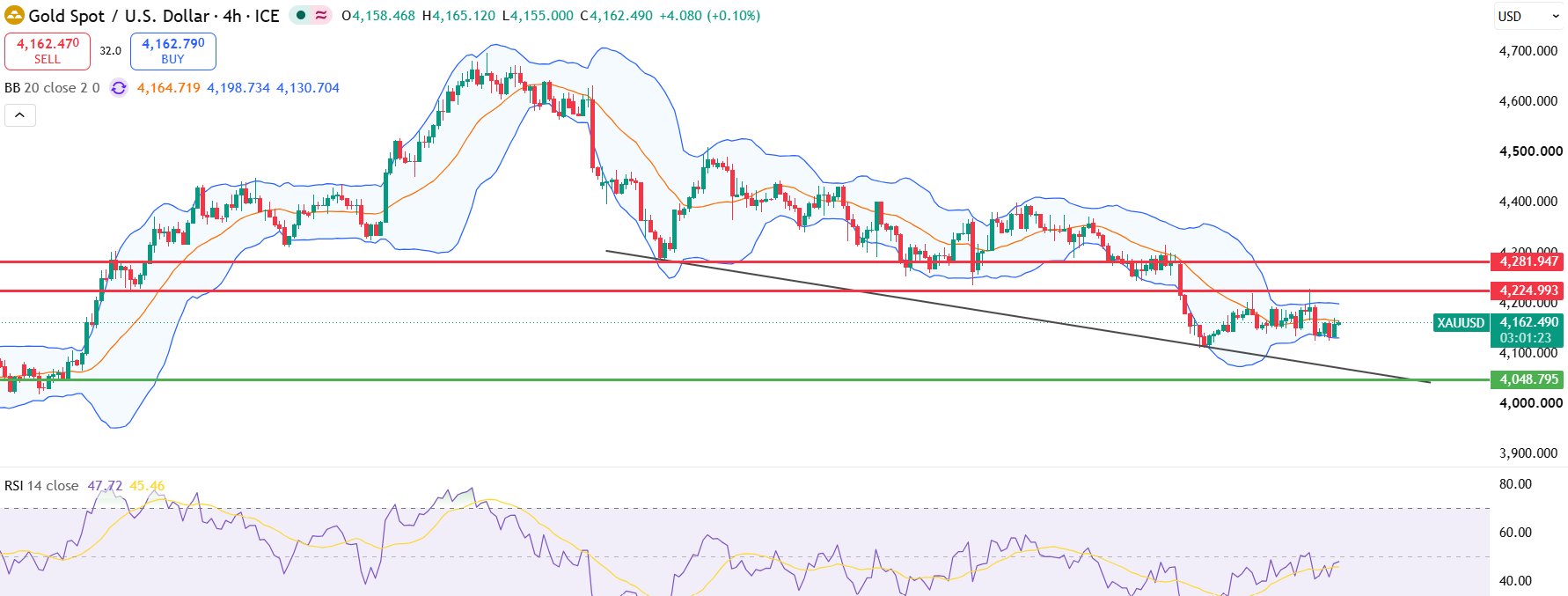
As long as gold holds above $4,100, the technical framework points to a potential recovery toward $4,180. A sustained break above that resistance would bring $4,230 into focus, followed by $4,260. Holding above $4,180 after a breakout would offer stronger confirmation than a brief intraday move.
Repeated rejection at $4,180 would suggest the rebound remains a temporary recovery within a broader decline.
On the downside, a sustained break below $4,100 would shift attention to $4,060. A loss of that level would further weaken the bullish setup and expose $4,000.
A sustained recovery still needs confirmation
Weaker hiring has improved gold’s near-term backdrop by reducing expectations for an immediate rate increase. Further gains, however, will depend on confirmation from both fundamentals and market behavior.
Defending $4,100 keeps the recovery scenario intact. Lower real yields, a softer dollar and evidence of cooling activity without renewed inflation pressure would strengthen it. Persistent yield pressure or a break below $4,100 would leave gold vulnerable to another decline.
Warning! This material is not intended as investment advice. Past performance data does not guarantee future returns. Investing in foreign currencies may affect your returns due to their fluctuations. Any transaction in securities may result in both profits and losses. The assumptions and expectations set forth in this material are only estimates that may not be accurate and may change depending on current economic conditions. These statements do not guarantee future returns.

Meet Syam KP, a financial markets professional with more than fourteen years of experience in forex, CFDs and capital markets. Since 2012, he has worked with several brokerage firms as a trader and market strategist, developing a practical understanding of how markets move. He also holds a qualification from CISI in the United Kingdom.
At FX Junction, Syam turns complex market information into clear and useful insights. His work combines technical and fundamental analysis, portfolio management, risk management and timely commentary on global developments. Whether markets are calm or moving fast, Syam focuses on what matters most: understanding the bigger picture, spotting meaningful opportunities and keeping risk firmly in view.
Relaterte artikler
Crude oil started the new month with strong momentum
Geopolitical tensions continue to influence oil prices. October’s opening trading session underscores how rapidly market dynamics can shift amid inventory concerns, policy announcements, and geopolitical uncertainties.
Les mer →Stronger UK GDP gives sterling breathing room ahead of US data
After a sharp decline, the British pound is catching a relief bid on Wednesday morning against the US dollar. The recovery from the 1.3200 area suggests selling pressure has eased, but the bounce alone does not establish a sustained reversal.
Les mer →